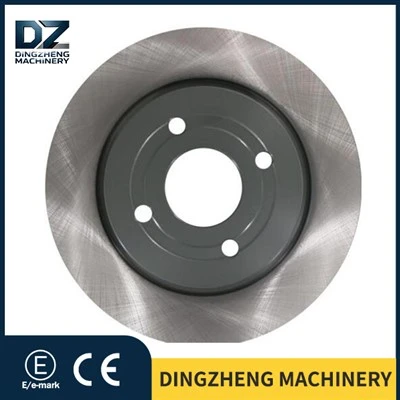

As automotive engineering continues to advance, braking systems face increasingly demanding requirements for safety, stability and durability. The brake disc is a key friction component in a disc braking system and must work precisely with the brake pads, calipers and wheel hub. Hyundai offers a diverse range of sedans, SUVs and electrified vehicles, with significant differences in vehicle weight, powertrain configuration and operating conditions. Brake disc dimensions, construction and thermal-management features therefore vary across different applications.
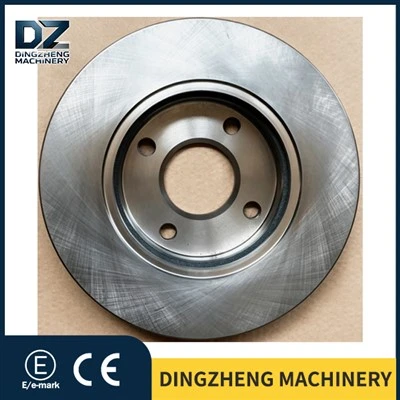
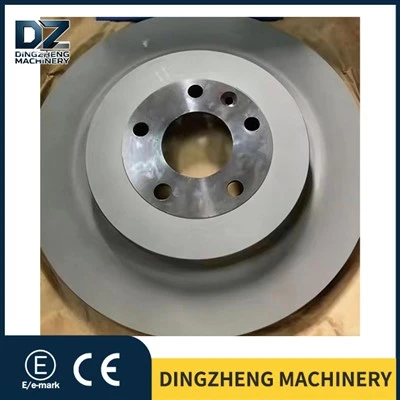
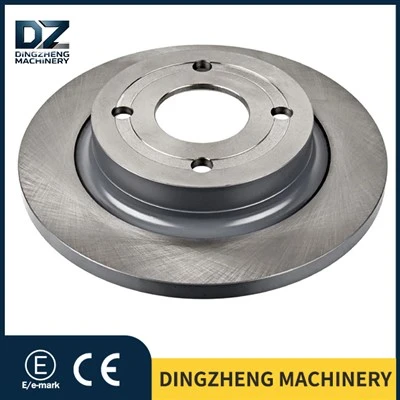
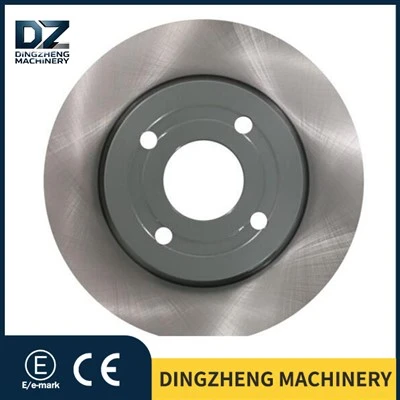
A typical Hyundai brake disc consists of the rotor body, friction surfaces, central locating area and mounting holes. The rotor body is designed to withstand the mechanical and thermal loads generated during braking, with its diameter, thickness and structural strength determined by the requirements of the specific vehicle. The central locating area helps ensure accurate alignment with the wheel hub, while the mounting holes secure the rotor to the wheel-end assembly.
Depending on the vehicle and braking requirements, Hyundai applications may use either solid or ventilated brake discs. Solid discs have a relatively simple construction and are suitable for applications with moderate braking loads. Ventilated discs feature internal cooling passages between the braking surfaces. As the disc rotates, air flows through these passages and helps remove heat generated during braking. For larger vehicles or applications exposed to higher braking loads, an effective ventilation design can improve thermal stability during repeated braking.
Brake disc materials must provide an appropriate balance of strength, wear resistance and thermal performance. Cast iron remains widely used because it offers proven mechanical properties and established manufacturing processes while providing practical cost efficiency. Depending on the specific vehicle application, material formulations and production processes can be optimized to meet different braking requirements and operating conditions.
Precision machining is essential for maintaining the dimensional quality of the disc. Thickness consistency, lateral runout, roundness and surface finish all influence the contact between the brake disc and brake pads. Accurate manufacturing can help reduce brake judder, abnormal noise and uneven friction-material wear, contributing to a smoother and more consistent braking experience.
Brake disc specifications can vary between Hyundai models, model years and powertrain configurations. Replacement components should therefore be selected according to the exact vehicle specification and original braking-system requirements. Proper compatibility with the brake caliper, pads and wheel hub is essential for safe and reliable operation.
As Hyundai continues to expand its electrified and lightweight vehicle technologies, brake disc development is also evolving. Future designs are expected to place greater emphasis on weight optimization, thermal management and long-term durability. Advances in materials, structural engineering and precision manufacturing will continue to support safer, more stable and more reliable braking performance across Hyundai's vehicle lineup.