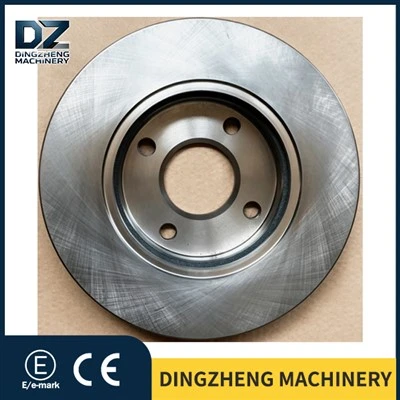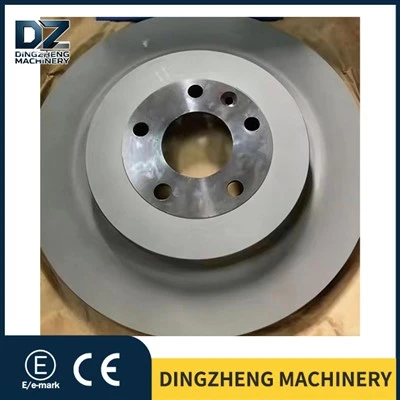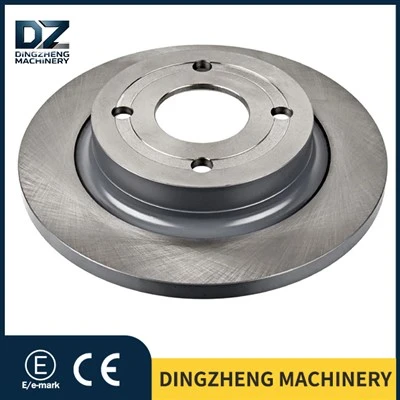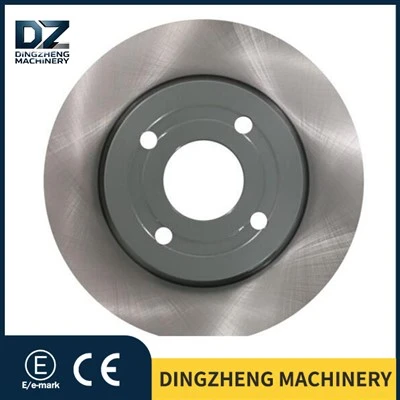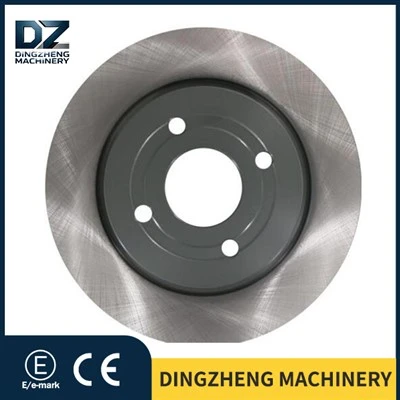

The automotive brake disc is one of the core components of a disc braking system. Although its overall appearance may seem relatively simple, a brake disc incorporates several functional areas that work together to deliver reliable braking performance. During operation, the disc is exposed to high rotational speeds, continuous friction and substantial thermal loads, making structural strength, dimensional accuracy and durability essential to its design.
A typical automotive brake disc consists of the braking surfaces, central hat section, mounting holes and, on certain designs, internal ventilation channels. The braking surfaces are the primary working areas of the disc and make direct contact with the brake pads. When the driver applies the brakes, the pads clamp onto the rotating disc, converting the vehicle's kinetic energy into heat through friction. The braking surfaces therefore require high dimensional accuracy, consistent flatness and strong wear resistance to maintain stable braking performance.
The central hat section is located around the center of the disc and connects the disc to the wheel hub. It plays an important role in positioning and securing the disc. Precise machining in this area helps ensure accurate alignment with the hub. Poor alignment can result in disc runout, vibration and reduced braking smoothness, particularly at higher speeds.
Mounting holes are typically arranged around the central section and are used to secure the disc to the wheel hub or related mounting components. Their number, spacing and dimensions must match the vehicle's original mounting configuration to ensure proper installation and secure attachment.
Some brake discs feature a ventilated construction, with internal passages between the two braking surfaces. As the disc rotates, airflow through these passages helps carry heat away from the braking system, improving thermal management. Ventilated designs are particularly useful for vehicles exposed to high braking loads or demanding operating conditions, where maintaining stable performance at elevated temperatures is essential.
Depending on the application, brake discs may also incorporate drilled or slotted surfaces, protective coatings and lightweight structural features. As electric and high-performance vehicles continue to evolve, brake disc designs are increasingly focused on higher strength, improved thermal management, lower weight and greater manufacturing precision. The integration of these technologies will help deliver more consistent braking performance and support the continued improvement of vehicle safety and driving dynamics.