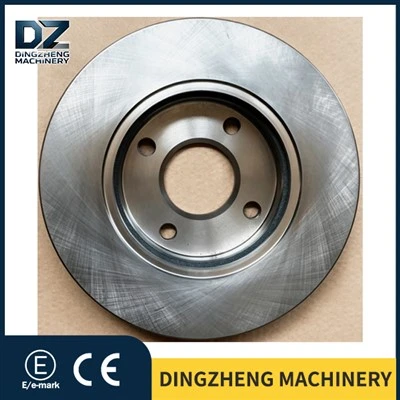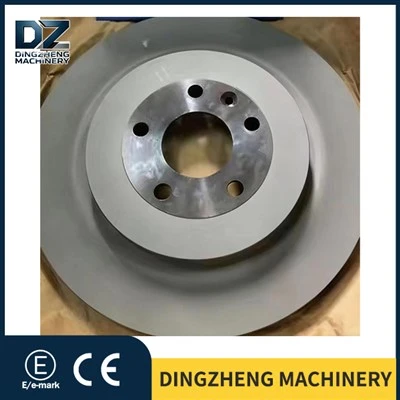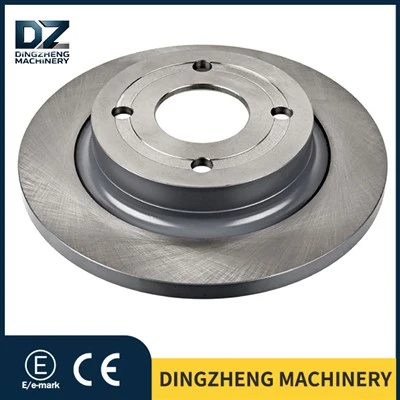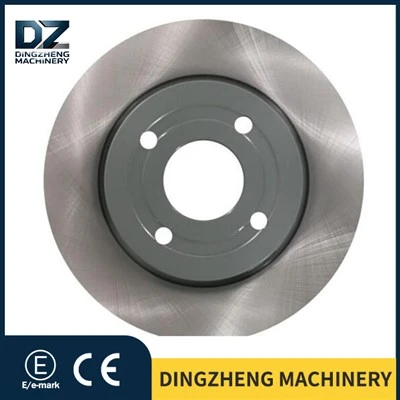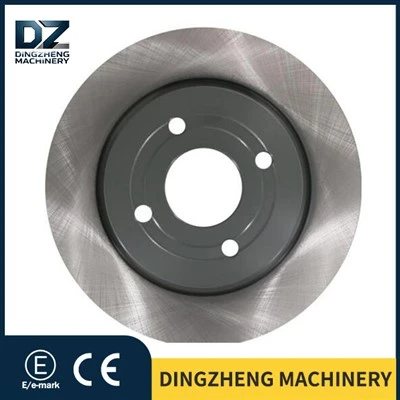
Euro 7 is shaking up the European auto aftermarket, and for the first time, brake particle emissions are officially regulated. Older emission laws mostly focused on exhaust fumes, but this new standard sets fixed PM10 limits for brake wear debris. It directly impacts every brake disc and brake pad set sold into EU markets. For regular M1 passenger cars, the cap is 7 mg/km. EVs with regenerative braking face an even stricter 3 mg/km limit, with more adjustments scheduled for 2035. Lots of our buyers have reached out lately, asking if replacement brake discs are ready for this shift. For aftermarket brake disc makers, getting ready for compliance starts with raw material choices and surface finishing. Ordinary grey iron rotors paired with standard brake pads will throw off far more dust during repeated stops. Our factory has developed low-emission coated brake discs for common European passenger cars, one example being OE 0986479R91 for the Volkswagen Golf VII. Each coated disc goes through precise CNC turning, dynamic balance check and anti-corrosion treatment. It completes 72-hour salt spray testing and carries ECE R90 approval, backed by our IATF16949 controlled production line. The matching brake pads are formulated to reduce abrasive wear. They cut down particle output without weakening braking performance or thermal resistance. European importers and garage owners need to tell genuine test results apart from simple advertising claims. A coated finish alone does not guarantee a disc meets Euro 7 emission standards. Real dynamometer testing under standard driving cycles is required to record particle levels accurately. Existing plain uncoated brake discs can still move through sales during the transition period. That said, buyers building long-term order plans will need to switch toward low-wear, low-dust disc and pad combinations. Repair shops that fit mismatched sets often run into wheel dust complaints, and may face compliance issues when vehicle inspection rules update. Reliable supply arrangements are another point buyers cannot overlook. We keep steady production capacity at our Shandong facility. Goods leave from Qingdao port, packed with VCI film, EPE foam and wooden pallets to stop rust forming during long ocean transport. Our technical team shares fitting torque values and wear limits for every OE number. For OE 0986479R91, the recommended mounting torque is 120 Nm, and 22 mm is the minimum safe thickness. We provide a 12-month warranty and reply to valid RMA requests within 48 hours. We supply EU distributors with test papers and certification files they can hand over to local repair garages. Euro 7 is not just a hurdle for parts sellers. It will help filter out less reliable suppliers. Moving forward, buyers will look for manufacturers that can deliver stable casting quality, verified emission test data, valid ECE R90 certificates and clear supporting paperwork. Working with a supplier already developing low-dust brake discs helps importers adapt early and protect their sales network across European repair markets.

Euro 7 Brake Particle Emission Rules: What Aftermarket Brake Disc Suppliers Need To Prepare