
Product Introduction
When it comes to the Kia K2500, seasoned professionals in the overseas automotive parts industry know well that this vehicle sells exceptionally well in Southeast Asia, the Middle East, and Latin America. It is essentially a work vehicle that operates daily on construction sites, transports building materials, and shuttles between urban and rural areas. Once its load capacity increases, the demands on the braking system extend far beyond merely "effective braking"; they require the brakes to maintain performance without degradation under repeated heavy application and to remain structurally intact even after prolonged use.
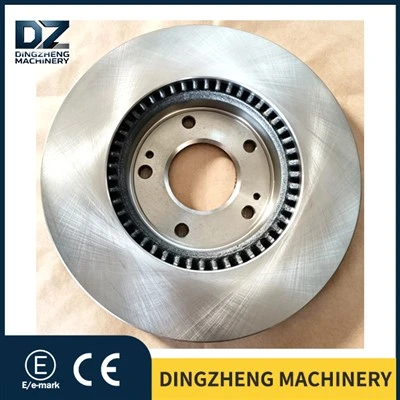
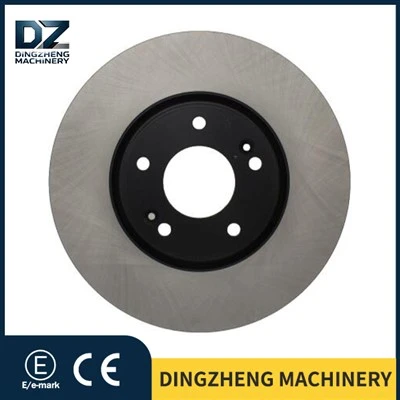
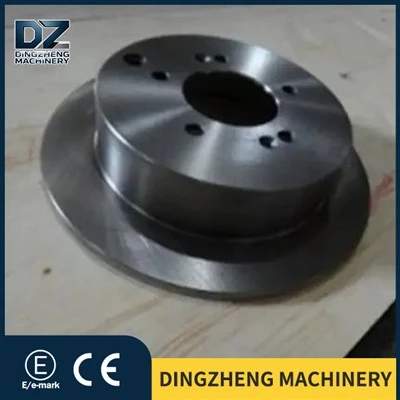
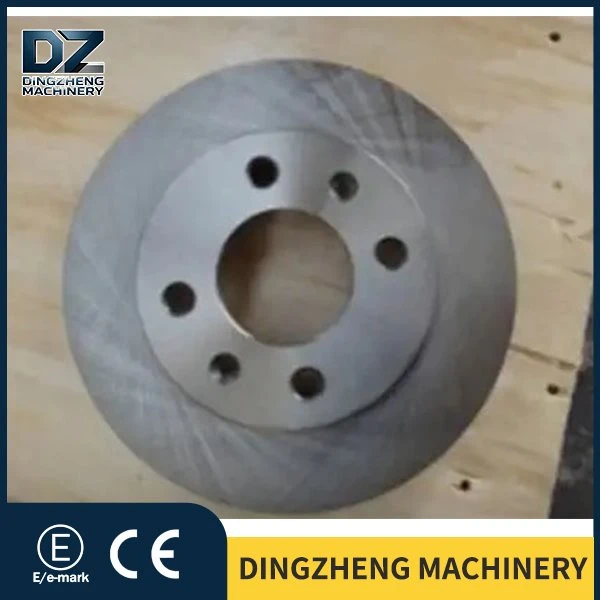
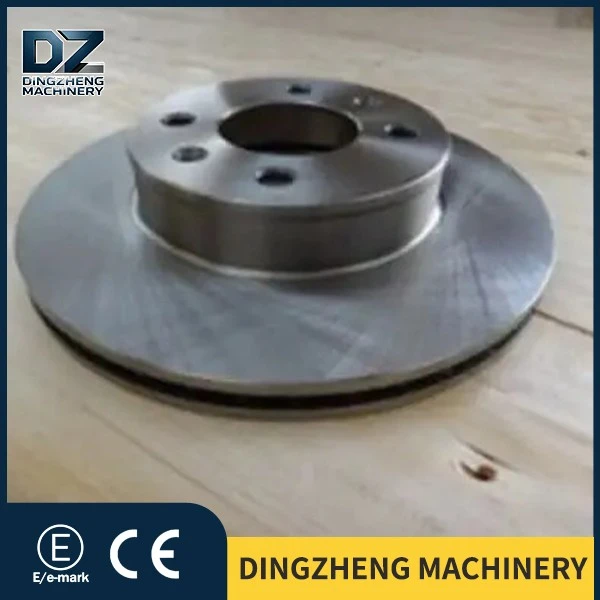
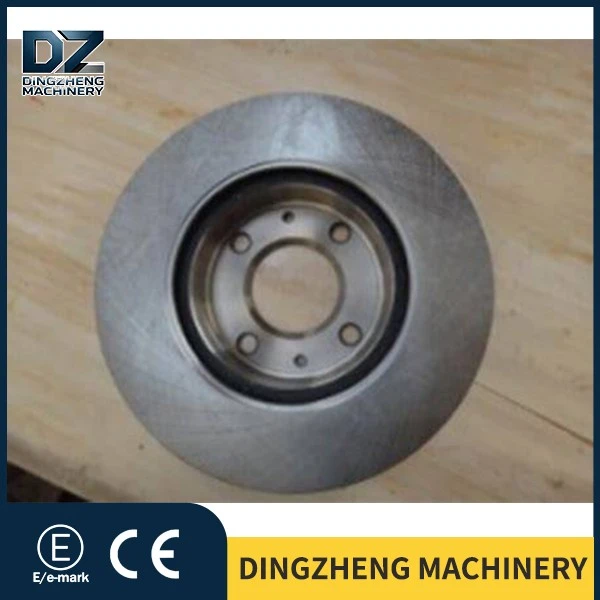
The front brake disc for the Kia K2500 truck, model OE-517124E000, was specifically designed for this particular application. Instead of resorting to a makeshift approach of using a generic size, we precisely matched the disc's geometric parameters against the original K2500 front axle's load distribution, brake caliper clamping force curve, and hub mounting surface offset. In essence, this brake disc is not merely "anywhere installable"; once installed, it ensures that the pedal feel, braking linearity, and critical point of thermal degradation all meet the standards of original OE components.
Many brake discs on the market claiming to be "compatible with the K2500" begin to vibrate when driven for just 2,000–3,000 kilometers. Upon disassembly and inspection, the end face runout exceeds the industry standard limit of 0.05 mm. In contrast, for the OE-517124E000 disc, we maintained end face runout within 0.03 mm throughout the entire process-from cast to finished product-making it ready for immediate use without requiring any finishing or repeated adjustments during the break-in period.
For overseas wholesalers and repair shops, the biggest concern is that customers may return with issues after installing the parts. The Kia K2500 truck front brake disc (part number 517124E000) is designed with a clear purpose: it enables repair shops to deliver vehicles promptly after installation and allows wholesalers to sell them without worrying about customer complaints.
Surface Treatment & Product Styles
Commercial vehicle brake discs have a commonly overlooked issue: non-friction surfaces are prone to rusting. While car owners may not pay much attention to this, truck owners closely monitor their wheel hubs daily; when the non-friction surface develops extensive rust, they often conclude that the disc is of poor quality and subsequently seek assistance from a repair shop.
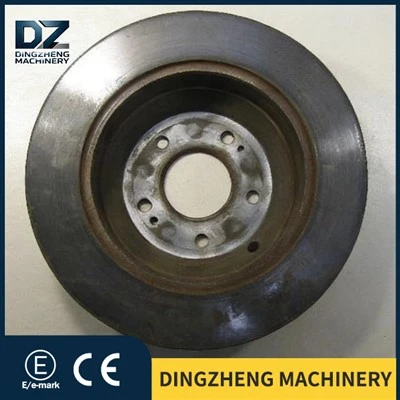
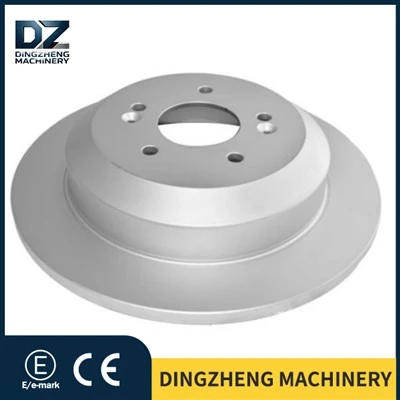
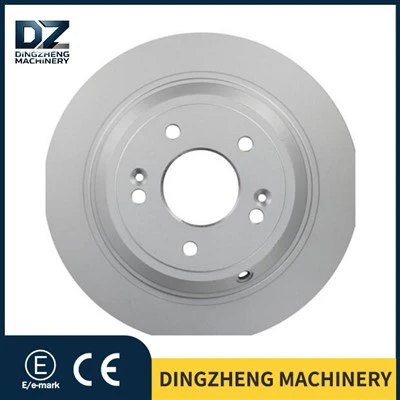
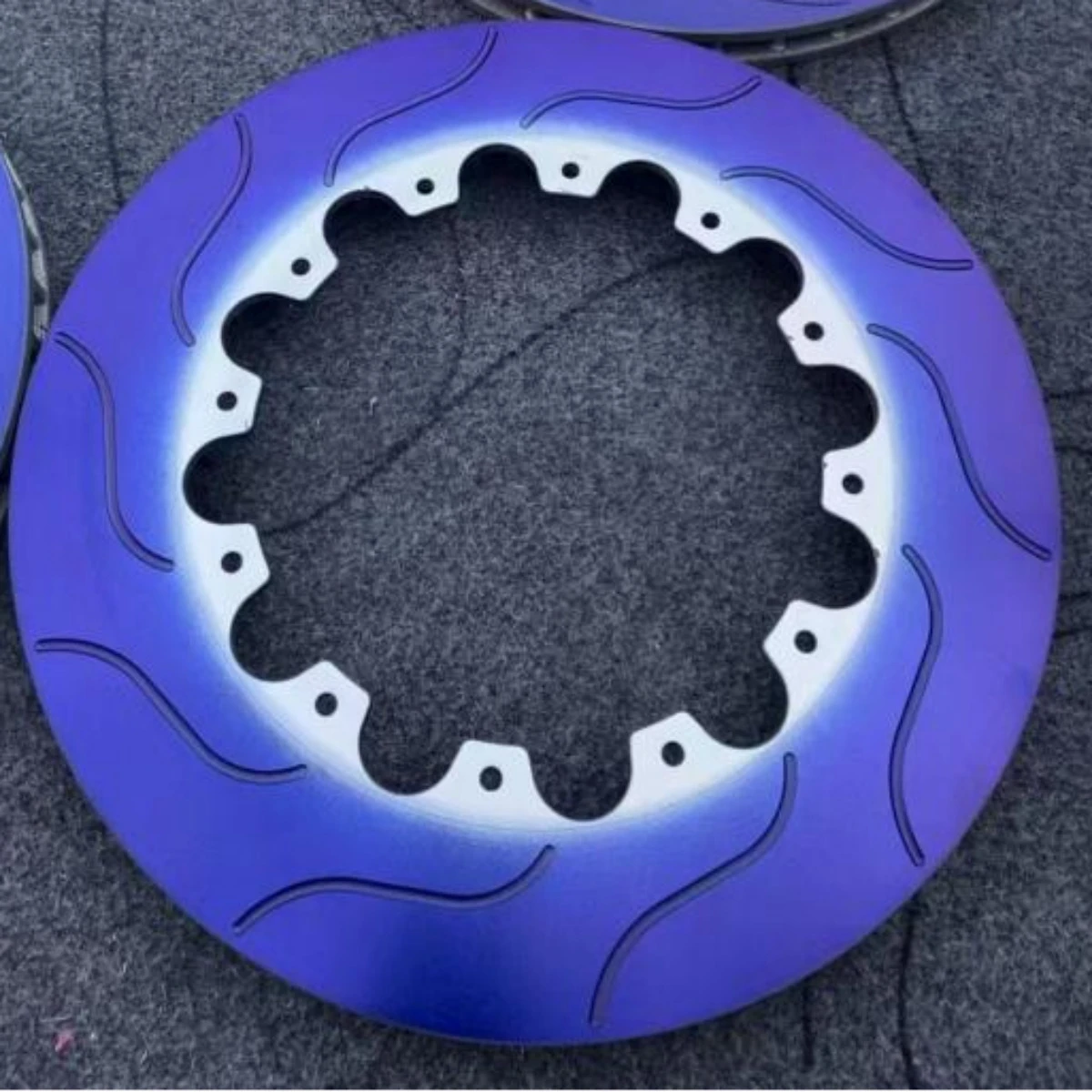
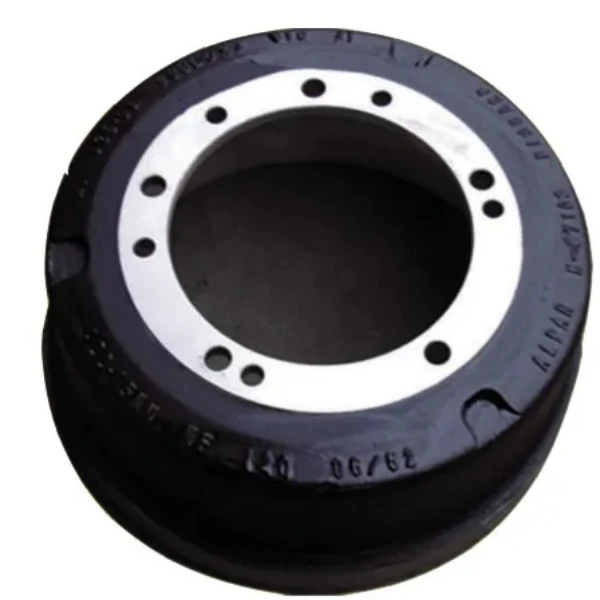
This Kia K2500 truck's front brake disc (model OE-517124E000) features a three-layer progressive composite anti-rust coating applied across all non-friction contact surfaces. Each layer meets stringent technical specifications and has been validated through rigorous testing-far more sophisticated than simply applying a black paint layer.
The first layer is the zinc-based phosphating pretreatment layer. After precision machining of cast iron blanks, residual cutting fluid, rust preventive oil, and microscopic oxide scale remain on the surface; if these are not thoroughly removed before painting, the paint will not adhere properly. We employ a room-temperature zinc-based phosphating process that forms a 9–13 μm phosphating film on the non-friction surfaces of the casting body. This film serves two critical functions: first, it completely removes oil contaminants and oxide impurities from the substrate surface, effectively providing a deep cleaning treatment for the cast iron base; second, it creates dense "anchoring points" at the microscopic level, ensuring that the subsequent primer coat penetrates into these structures rather than remaining superficially adhered, thereby increasing adhesion by over 42%. These results were obtained through actual measurements using a pull-out adhesion tester, not based on arbitrary assumptions.
The second layer is an epoxy zinc-rich primer. We employ an epoxy formulation with a high zinc content, achieving a zinc concentration of ≥86.5% in the dried film and a film thickness of 24 ± 4 μm. Why such a high zinc level? Because road conditions under heavy vehicle traffic are far more complex than those for passenger cars-rock roads, sandy soils, construction mud-all significantly increase the likelihood of minor damage to non-friction surfaces from stone impacts compared to passenger vehicles. The core benefit of this zinc-rich primer lies in its cathodic protection effect: even if a small section of the surface is damaged by stones, the exposed zinc powder will undergo oxidation first, sacrificing itself to protect the underlying cast iron substrate and inhibiting corrosion at its early stages. We conducted a cross-mark salt spray test: samples with the damaged areas exposed were placed in a salt spray chamber, and after 500 hours, no red rust had spread at the marked locations. This is why we can confidently state that "minor impacts do not cause rusting."
The third layer is a weather-resistant water-based UV topcoat. The outermost layer consists of a 21±3 μm thick UV-curable water-based finish. The choice of water-based paint is not merely driven by environmental concerns, but rather because it exhibits higher molecular cross-linking density, resulting in a denser film with superior hydrophobic properties after curing. In environments like those during Southeast Asia's rainy season, where surfaces remain exposed to continuous moisture for months, conventional solvent-based topcoats experience gradual loss of adhesion upon moisture absorption and eventually peel over time. For instance, the front brake disc of our Kia K2500 truck (model 517124E000) features a UV-coated surface that passed a 500-hour neutral salt spray test (ISO 9227 standard), showing no red rust, bubbling, or peeling on non-friction surfaces. This performance holds true whether in coastal regions with high salt concentrations or cold climates requiring winter snow removal salt application.

Product Technical Parameters
|
Item |
Specification Unit |
Item |
Specification Unit |
|
Mounting Position |
Front brake |
Disc Outer Diameter |
278mm |
|
Brake Disc Thickness |
26mm |
Minimum Wear Limit Thickness |
24mm |
|
Centering Diameter |
92mm |
Disc Overall Height |
41.8mm |
|
Number Of Mounting Holes |
5 |
Pitch Circle Diameter |
120mm |
|
Disc Structure Type |
Vented |
Single Disc Weight |
6.94kg |
Vehicle Matching & Cross Reference Part Numbers
Compatible Vehicle Models
This brake disc is compatible with a wide range of car models, as follows:


Kia BONGO Cargo Platform/Chassis (PU), Oct 2003 – Present
Kia K2500 Truck (SD), manufactured from June 2001 onwards
Cross Reference Part Number Table
|
Brand Code |
Part No. |
OE Factory Code |
OE Number |
|
TRW |
6712 |
OE |
517124E000 |
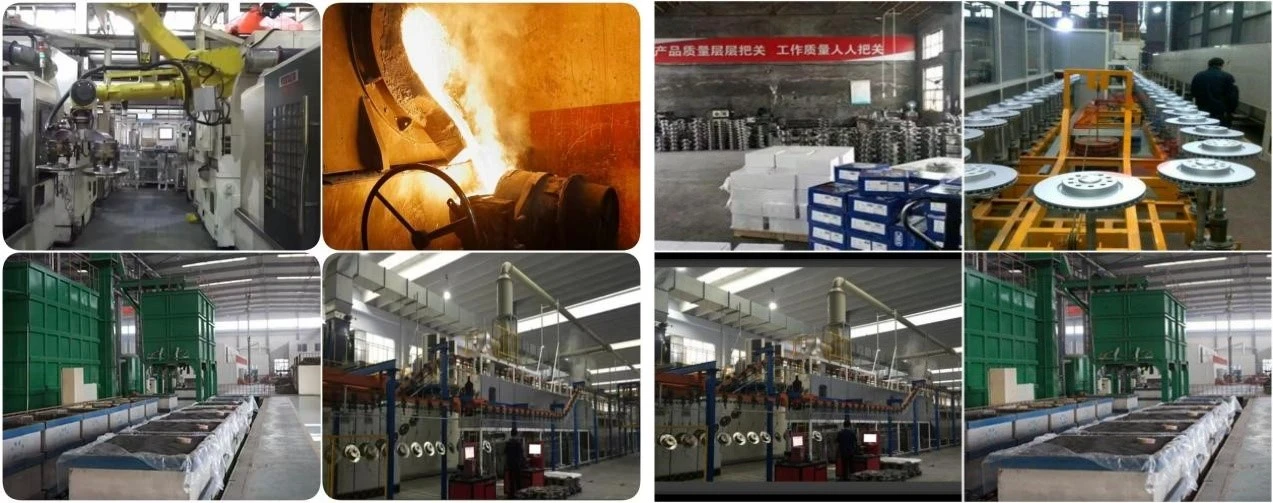
Production & Machining Workshop--The precision of the braking disc is determined by the equipment's feeding process.
In the brake disc manufacturing industry, a simple walk through the workshop-examining the equipment and inspection stations-is sufficient to assess product quality. We do not engage in OEM contract manufacturing; the front brake disc OE-517124E000 for the Kia K2500 truck undergoes the entire production process from raw material intake to final packaging entirely within our own facility.
Cast blanks undergo inspection upon arrival at the factory, first passing through a spectral analyzer with a sampling rate of no less than 20% per batch. The analysis covers carbon equivalent, silicon content, manganese content, and sulfur and phosphorus impurities. The material standard complies with HT250 gray cast iron, with carbon equivalent controlled within the range of 3.8%–4.1% – this range represents the optimal balance between thermal stability and wear resistance for brake discs. Excessively low carbon equivalent results in overly hard disc surfaces, leading to increased braking noise and faster wear of brake pads; conversely, excessively high carbon equivalent produces coarse graphite particles and poor resistance to thermal cracking. Material reports for each batch of blanks are archived and can be provided upon customer request at shipment.
The CNC precision machining line operates with CNC vertical lathes from Taiwan's Youjia and Shenyang Machine Tool, not the traditional hand-operated lathes. Both sides of the disc are clamped simultaneously to complete roughing and finishing operations, ensuring that the parallelism between the friction surfaces on both sides remains within 0.02 mm. What does this precision requirement entail? After loading, the brake disc and brake pads make uniform contact without eccentric wear or brake vibration caused by parallelism deviations. The workshop maintains a constant temperature of 22±3°C, with continuous operation year-round; this temperature control is not merely nominal-cast iron components are highly temperature-sensitive, and dimensional tolerances produced at 20°C versus 35°C can differ by several micrometers. A stable temperature environment is fundamental for ensuring consistent quality across production batches.
Dynamic balancing and end face runout inspection: Each Kia K2500 truck's front brake disc (OE-517124E000) must undergo dynamic balancing after precision machining, with the imbalance controlled within 15 g·cm. Compared to industry standards where many commercial vehicle brake discs are approved at only 25–30 g·cm, our requirement is nearly half as stringent. Poor dynamic balancing causes steering wheel vibration during high-speed braking, making drivers perceive abnormalities immediately upon applying the brakes. End face runout is inspected piece-by-piece using a micrometer; any deviation exceeding 0.03 mm results in immediate rejection for rework before leaving the factory.
The full-process quality inspection workshop encompasses six critical stages from raw materials to finished products: raw material spectroscopy → random dimensional inspection after rough machining → comprehensive parallelism check after precision machining → thorough hole position verification after drilling → complete dynamic balance testing → comprehensive inspection of product appearance and packaging. Each stage features dedicated inspection stations and documentation forms, with all records signed and archived by quality inspectors. When overseas clients visit the facility for inspection, this entire documentation system can be readily accessed.
Delivery, Logistics & After-sales Service
Packaging Method: Each brake disc is individually wrapped with anti-rust paper, then put into a PE moisture-proof bag and vacuum-sealed.
Each set (2 pieces) is placed in a customized corrugated carton lined with EPE foam cushion pads.
Bulk orders (more than 10 sets) will be additionally packed in export-grade plywood wooden cases. The inner walls of the wooden cases are lined with waterproof polyethylene film, and the four corners of the cases are reinforced with steel strips.
The wooden cases comply with the ISPM-15 export quarantine standard and can be directly shipped to all markets including Europe, America, Southeast Asia and the Middle East.
The quality warranty period for all Kia K2500 truck front brake discs (OE-517124E000) is 12 months from the pickup date. The warranty covers: disc cracks caused by manufacturing defects, abnormal wear, excessive dynamic balance deviation, and detachment of non-friction surface coatings; excludes: normal wear, deformation due to improper installation, and abnormal damage resulting from use of inferior brake pads. After-sales service: upon photo or video verification of a quality issue, a resolution plan will be provided within 48 hours, with customers having the option to choose between restocking or a refund.
FAQ (Frequently Asked Questions)
Q1: How can I confirm whether this OE number fits my vehicle?
A: The front brake disc OE-517124E000 for Kia K2500 trucks corresponds to Kia's original OEM part number 517124E000, suitable for the front axles of K2500/K2700/K3000 series models. Provide your vehicle VIN code or a photo of your vehicle registration certificate before placing an order, and we will cross-check compatibility free of charge. Goods will only be shipped after confirming a proper fit to prevent incorrect purchases.
Q2: How does the quality of this disc compare with the original OEM version?
A: It adopts HT250 gray cast iron as the benchmark material with a carbon equivalent of 3.8%-4.1%, face runout ≤0.03mm, and dynamic balance ≤15g·cm. The non-friction surfaces feature three layers of anti-rust coating, delivering zero red rust after 500 hours of salt spray testing. We are confident to display and compare all these specifications side by side with those of original OEM parts. Many overseas repair shops have replaced genuine OEM brake discs with ours after installation, thanks to our superior cost performance and efficient after-sales service.
Q3: The newly received front brake disc part number 517124E000 for Kia K2500 trucks has a dark protective film on its friction surface. Is sanding required before installation?
A: Sanding with sandpaper is unnecessary. This dark film is a short-term anti-rust passivation coating for the friction surface, a wearable protective layer. It will wear off naturally after dozens of kilometers of gentle braking following installation without compromising braking performance. Intentional sanding with sandpaper may damage the original flatness of the disc surface and artificially introduce runout errors. Simply wipe off surface dust and oil stains with a clean rag prior to installation.
Latest Company & Product News
The new national standard for China's braking systems, GB 21670–2025, is set to be implemented. On May 30,2025, the Ministry of Industry and Information Technology issued the mandatory national standard "Technical Requirements and Test Methods for Braking Systems of Passenger Vehicles" (GB 21670–2025), which will take effect on January 1, 2026. The new standard establishes more specific requirements for evaluating brake disc wear and explicitly prohibits removing wheels to inspect brake pad wear. Although this standard primarily applies to M1-class passenger vehicles, technical requirements for commercial vehicle brake discs are also becoming increasingly stringent. Domestic manufacturers producing brake discs or those exporting products for domestic sales should closely monitor developments related to this standard.
New energy vehicles impose unique demands on brake discs. Due to the installation of regenerative braking systems (energy recovery), the actual operating stress on brake discs differs significantly from that in conventional fuel vehicles-while mechanical braking is used less frequently during daily driving, the load during emergency braking is actually higher. This imposes greater requirements on brake discs regarding thermal crack resistance and friction uniformity. Although the K2500 is a diesel light truck and does not fall under the new energy vehicle category, this trend indicates that the technical threshold for brake discs across the entire industry continues to rise.
Hot Tags: front brake discs for kia k2500 truck, China front brake discs for kia k2500 truck manufacturers, suppliers, factory