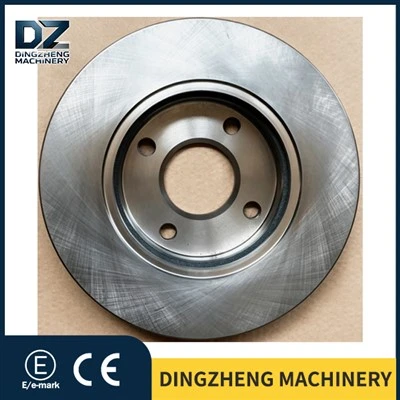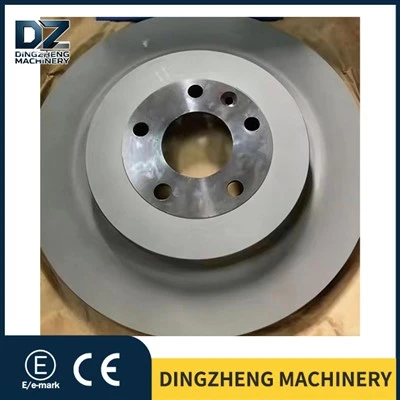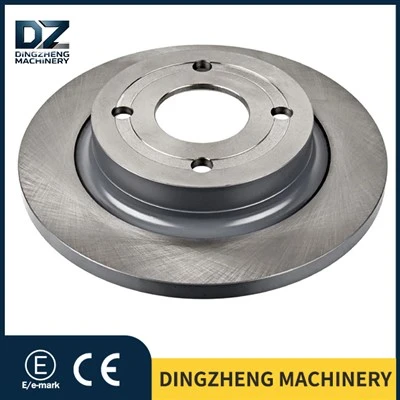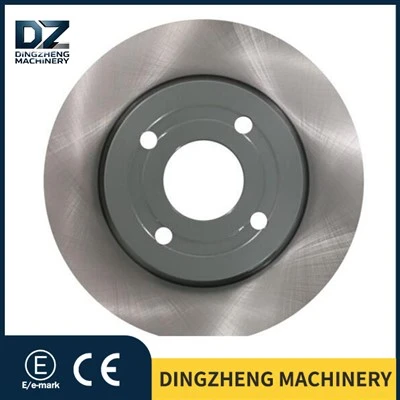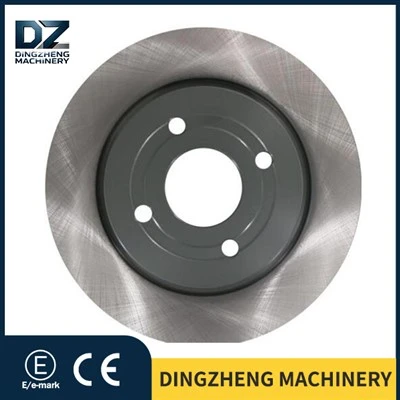

As automotive technology continues to evolve, braking systems have become an increasingly important part of vehicle safety and driving quality. The brake disc is a key friction component in a disc braking system and plays a central role in vehicle deceleration and stopping. Nissan offers a diverse range of vehicles, including sedans, SUVs, MPVs and electrified models. Differences in vehicle size, weight and powertrain configuration mean that brake disc specifications and designs are tailored to individual applications.
Brake discs used across Nissan vehicles are commonly manufactured from materials such as cast iron. These materials provide a practical combination of strength, wear resistance and thermal stability, allowing the disc to withstand the friction and heat generated during braking. Appropriate material engineering also helps maintain dimensional stability over the service life of the component and reduce performance degradation caused by repeated thermal and mechanical loading.
Brake disc construction varies according to vehicle requirements and braking loads. Depending on the application, Nissan vehicles may use either solid or ventilated discs. Solid discs have a relatively simple construction and are suitable for applications with moderate braking demands. Ventilated discs incorporate internal cooling passages that promote airflow as the rotor rotates, helping remove heat generated during braking. On larger vehicles or applications exposed to higher braking loads, an effective ventilation design can improve heat dissipation and support more consistent performance during repeated braking.
Brake disc dimensions and mounting arrangements are also highly application-specific. Different Nissan models may use different disc diameters, thicknesses, center bores and mounting-hole configurations. The disc must be correctly matched with the vehicle's caliper, brake pads and wheel hub to ensure proper operation. When replacing a disc, the exact model year and braking-system configuration should therefore be verified rather than relying only on the vehicle name or brand.
Manufacturing precision has a direct influence on braking quality. Thickness consistency, roundness, lateral runout and friction-surface finish all affect the contact between the brake disc and brake pads. Precise machining can help minimize brake judder, abnormal noise and uneven pad wear, contributing to smoother and more consistent braking performance.
Long-term durability is another important characteristic. Regular inspection of the brake disc for excessive wear, cracks, corrosion or deformation can help identify potential problems at an early stage. Components that have reached the specified service or wear limits should be replaced in accordance with the appropriate maintenance procedures.
Overall, Nissan brake discs are characterized by proven construction, stable braking performance, effective thermal management and application-specific fitment. As electrification and lightweight engineering continue to influence vehicle development, brake disc technology is expected to advance through improvements in materials, structural design and thermal management, supporting safer and more reliable vehicle operation.