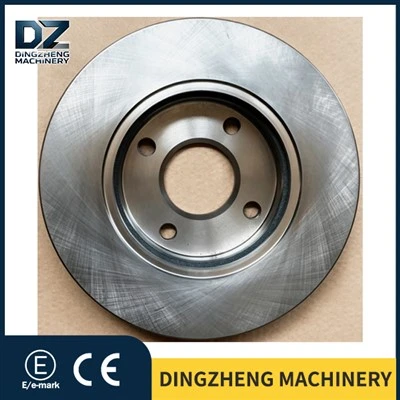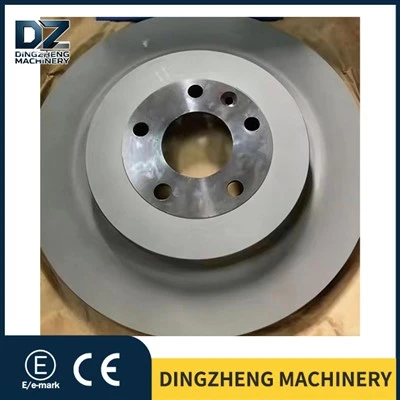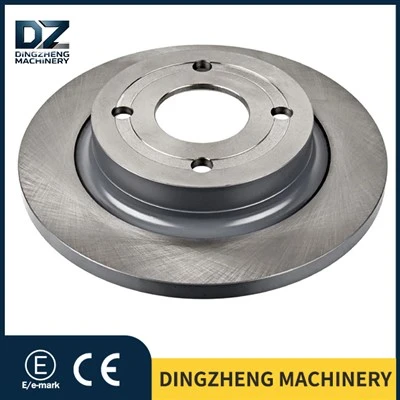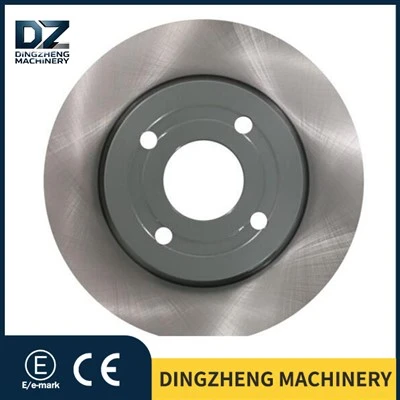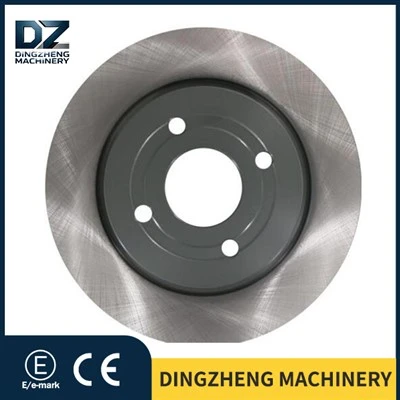

As the automotive industry continues to advance toward higher performance, electrification and intelligent vehicle technologies, braking systems are facing increasingly demanding requirements. As a key component of a disc brake system, the brake disc is responsible not only for vehicle deceleration and stopping but also for maintaining consistent performance under high temperatures, heavy loads and repeated braking. Depending on their construction, manufacturing methods and intended applications, automotive brake discs can be classified into several major types.
Solid brake discs are among the simplest and most widely used designs. They feature a single-piece disc structure and are relatively straightforward to manufacture, making them a cost-effective option for many compact passenger cars and vehicles with moderate braking demands. However, their ability to manage heat is more limited than that of ventilated designs, particularly during repeated or high-load braking.
Ventilated brake discs are widely used in modern vehicles that require greater thermal capacity. These discs incorporate internal ventilation channels that promote airflow as the disc rotates, allowing heat generated during braking to be released more efficiently. Compared with solid discs, ventilated designs generally provide superior thermal management, making them well suited to mid-range, performance-oriented and heavier vehicles, as well as applications involving frequent braking.
Brake discs can also be categorized by their surface design. Plain discs feature a relatively smooth braking surface and are commonly used for everyday road driving. Drilled discs incorporate strategically positioned holes that can promote heat dissipation and help evacuate gases generated under demanding braking conditions. Slotted discs feature machined grooves across the braking surface, which can help remove debris and maintain consistent contact between the brake pad and disc.
High-performance vehicles may also use composite brake discs or advanced lightweight designs. These technologies can reduce unsprung mass while improving thermal performance, braking response and vehicle handling. As electric and performance vehicles continue to evolve, brake disc development is expected to focus increasingly on lightweight construction, efficient heat management, durability and reduced noise. A wider range of structural and material solutions will help manufacturers tailor braking systems to the diverse requirements of modern vehicles.